
Academia Ursorum feature story: San Francisco - The Genius Of Place
Updated: Mar 30
Story by Les K. Wright (PhD)
[Tallinn Bearty] This story is an insightfully short look at why San Fransisco was almost a perfect location to induce the start and evolvement of the community and culture of bears, that worldwide phenomenen known to so many today.
Don't forget to be present and hear Les talk in person about history of the community.
San Francisco is a collection of distinct neighborhoods, each with its own characteristics. Eureka Valley was an ethnic neighborhood settled by working-class Irish and Scandinavians. In the 1970s gay newcomers settled in the sleepy neighborhood and renamed it the Castro District. It is in the geographical center of San Francisco. It had a streetcar and a bus line that ran directly down Market Street, a quick trip to the commercial and financial districts. The MUNI Metro subway has replaced both.
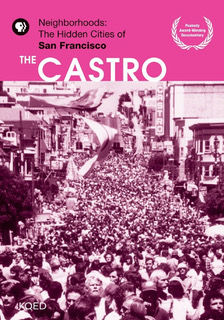
San Francisco was large enough to attract a sufficient number of gay immigrants but small enough to not get lost in the anonymity of megapolises like New York or London. The Castro is a physical neighborhood permitting all the infrastructure of an ethnic neighborhood.
Gay restaurants, gay bars, gay sex clubs, gay bookstores, a gay bank, a gay travel agency, a gay real estate company, Harvey Milk’s (gay) camera shop, and other gay specialty shops sprang up. The spirit of The Castro street scene in the 1970s and early 1980s has been described as “joyous, liberating, and uncomplicated.” You knew your gay neighbors, you did business with gay merchants, you were part of the gay grapevine.
San Francisco became a gay city after World War II, when huge numbers of American service men and women were discharged there. Finding it a beautiful place that welcomed them, many stayed. Polk Street became the first commercial, entertainment, and residential gay neighborhood.
Life magazine published an article “Homosexuality in America” in its June 24 1964, issue, proclaiming San Francisco “the gayest city in America.” The article included a two-page spread of Chuck Arnett’s mural which hung in the Toolbox, a leather bar in the South of Market district. It introduced the American public to the existence of masculine gay men. It served as a beacon drawing like-minded gay men to The City.
In the 1970s gay men began to move South of Market (SOMA) and to Castro Street, where the housing was more affordable. The white-flight to the suburbs had left many Victorians in The Castro empty and available for cheap rent. Carl Wittman and Armistead Maupin sent out clarion calls. In his 1970 “A Gay Manifesto” Wittman wrote, “San Francisco is a refugee camp for homosexuals. We have fled here from every part of the nation, and like refugees elsewhere, we came not because it is so great here, but because it was so bad there. […] And we have formed a ghetto, out of self-protection. It is a ghetto rather than a free territory because it [still belongs to the heterosexuals].”
In 1976 Armistead Maupin began writing a column in the San Francisco Chronicle called “Tales of the City.” His endearing portrait of the emergent gay life in The City amplified Wittman’s clarion call.
In the 1980s the standard of sexual desirability was the Castro clone—young, smooth-skinned, and gym-toned. Older, hairy, and fat gay men were often shunned, sometimes barred from gay bathhouses, and even made fun of in public. Black men were often blocked from entering the bars in the Castro. (Some bars required three photo IDs but only demanded them from black customers.) Bars in other neighborhoods catered to lesbians, to Latinos, or to Asians. This resulted in the Castro being mostly white and mostly young.
Gay Bears taking over
In the 1980s the idea of gay bears was part of the zeitgeist. At that time self-identifying bears in San Francisco connected with each other through several local channels. Out of this inchoate beardom a loosely cohesive bear community took root. They rallied around the idea of “beards, bellies, and body hair.”
Cruising
Part of the Castro street scene was that the street was a cruising ground. Gay men walked the two-block loop up and down Castro Street. This was where you flagged your preferences—earring, key chain, and hanky (left for top, right for bottom). Your hanky was color-coded to indicate your proclivities, for example, dark blue for anal, red for fisting, gray for bondage, and purple for piercing. As a camp rejection of gay men reducing themselves to what they do in bed, some bears tucked a small teddy bear in the back pocket of their jeans to signal “I like to cuddle.”
AIDS and Bear play parties

In the face of the AIDS epidemic the San Francisco Health Department closed the bathhouses (dramatized in Randy Shilts’s And the Band Played On). Private sex clubs formed when the bathhouses were shut down. Bears followed suit and created the Bear Hug and Leather Bear play parties which were held in a Victorian house on 15th Street on the edge of the Castro.
Bears as fresh alternative
About the only option older gay men previously had to remain sexually viable was to become a leather man. Bears became an alternative for gay men not drawn to leather. However, many leathermen embraced a new leather bear identity.
AIDS-related wasting syndrome led Castro clones to put on extra weight. Being hefty became sexualized. Some Castro clones transformed into bears.
BEAR magazine
In 1987 Richard Bulger began publishing BEAR, a local zine. It featured photos of “naturally masculine” men Bulger found on the streets of San Francisco and personal ads, also mostly placed by local men. The BEAR office, located on the edge of the Castro, became a must-visit site for bears.
Lonestar Saloon

Rick Redewell opened the Lonestar Saloon for blue-collar gay men who felt uncomfortable in other gay bars. It quickly became the drinking hole for bears.
BBS, facebook before Facebook
Many self-identifying bears were employed in the new high tech industry emerging in Silicon Valley in the South Bay. They were pioneers in the development of BBSs [bulletin board services]. They created one specifically for bears in San Francisco. It was a place for discussions of all things bears, such as the play parties, BEAR magazine, making friends, finding a job or an apartment, and “flaming” (attacking) each other.
Rise of the community
There are two important but forgotten catalyzers that contributed to creating bear community in San Francisco. One was the AIDS epidemic, which caused gay men to eroticize hefty body weight. The other was the bears’ self-determination that bears are “self-identifying.” If you say you’re a bear, then you’re a bear. This self-determination served both as an inoculation against being judged by in-group outsiders as well as a means of bonding together in a self-accepting body-positive community.
About Tallinn Bearty
Tallinn Bearty is an annual international festival celebrating Bear culture and queer creativity. Each year focuses on a specific artistic discipline—visual arts, music, or cinematography, rotating on a tri‑annual cycle. The 2026 edition is dedicated to Music. Academia Ursorum is series of free public lectures in light format to create academic awareness about different topics featuring academic members of bear community.
Media Contact
Tallinn Bearty Team +37256155494 tallinnbearty@icloud.com